
Key Takeaways
Indoor and outdoor cannabis are shaped by their growing environment, and the difference goes well beyond price. Outdoor cultivation can support rich terpene development in the right climate, while indoor cultivation gives tighter control over contaminants, consistency, and harvest timing. Neither method alone determines potency, which comes down to genetics, cultivation practices, and lab-verified testing, all of which matter more in a hot, humid climate like Bangkok’s.
Bangkok’s tropical climate, with its heavy monsoon rain and near-constant humidity, creates growing conditions that outdoor cultivation elsewhere does not have to contend with year-round. The choice between indoor cannabis vs outdoor cannabis changes more than the cost alone. It also shapes contaminant exposure, batch consistency, and how terpenes and cannabinoids develop.
The better way to judge quality is by what each method actually does to the plant, rather than assuming one is automatically better. That comes down to cultivation control and lab-verified results, and here is how the two approaches compare.
Features of Outdoor-Grown Cannabis and How It Shapes Quality
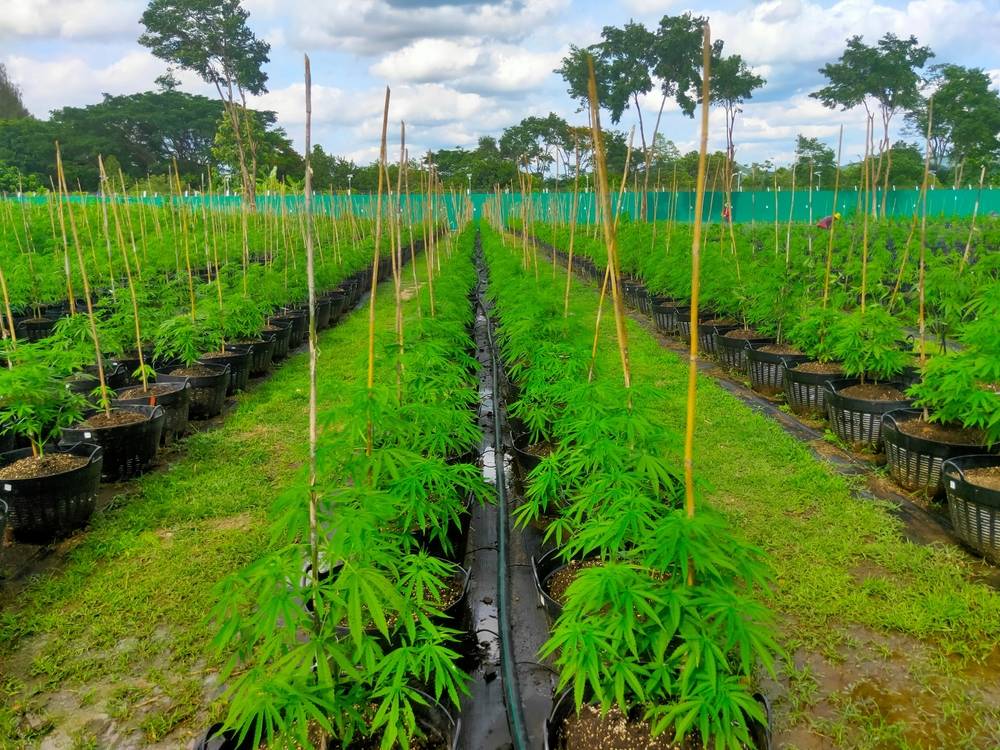
The defining features of outdoor-grown cannabis start with the environment. Outdoor plants grow in natural sunlight and soil, which generally produces larger plants and higher per-plant yields.
Full-spectrum light and seasonal changes aid in developing complex terpenes because the interaction of soil, weather, and location imbues outdoor flowers with a unique, difficult-to-replicate character. However, the outcomes differ significantly depending on the climate and the grower’s expertise.
Sun-grown cannabis is more vulnerable to environmental factors like weather, pests, and contaminants, making post-harvest testing crucial for these outdoor flowers. Climate impacts cannabis aroma in two ways: heat causes volatile terpenes like myrcene and linalool, responsible for its smell, to degrade. This means a plant with a developed scent profile can still lose some of its aroma due to weather before it’s harvested.
However, it’s important to debunk a common misconception at this point. Outdoor potency does not automatically decrease. Canabinoid content is more influenced by genetics, harvest timing, and curing than by the growing environment alone.
Features of Indoor-Grown Cannabis and How It Shapes Quality
The features of indoor-grown cannabis come down to control. Indoor cultivation facilitates control over temperature, humidity, lighting, and airflow, which supports repeatable results from one batch to the next. That control does more than keep the room comfortable. Relative humidity above roughly 65 percent encourages mold, which ruins both the flower and its terpene profile, so being able to hold humidity in a stable range directly protects quality. A closed environment also reduces exposure to pests and airborne pollutants, which matters a great deal in hot, humid climates.
Automated fertigation systems add another layer of consistency, delivering precise, measured nutrients across every growth cycle rather than leaving it to rainfall and soil variation. The visible result is that indoor buds tend to be denser with heavier trichome coverage, though that reflects cultivation control rather than inherently higher potency.
What indoor growing provides is predictability: the same inputs, the same conditions, and a similar outcome each harvest.
Indoor or Outdoor: Which Produces Better Flower?
The indoor cannabis vs outdoor cannabis question rarely has one clean answer, so it helps to separate potency from consistency.
Potency and Terpene Profiles
Comparisons show mixed results. Some find slightly higher average THC indoors, while outdoor-grown flowers sometimes show richer terpene diversity. Neither method reliably produces stronger effects.
Cultivation practices and genetics matter more than the environment alone, so a well-grown outdoor plant can easily be just as good as an indoor one.
Consistency and Contaminant Control
Indoor cultivation makes it easier to hit the same cannabinoid and terpene targets every harvest, which matters most where dosing consistency is expected, such as medical use. Outdoor cultivation depends heavily on climate and season, which introduces more batch-to-batch variation.
For anyone who needs to know their product will perform the same way each time, that consistency is often the deciding factor.
Why Medicana Grows Indoors in Bangkok’s Climate
At Medicana Lab, we run a 785 sq.m. GACP-certified indoor facility in Wang Thonglang, Bangkok (Cert No. TH-GACP 16/2569, valid through October 2028). Our closed, climate-controlled environment protects our clone-based cultivars from Bangkok’s heat, humidity, and monsoon-season mould risk all year round.
Together with automated fertigation and a perpetual crop cycle to keep nutrient delivery and harvest timing consistent across every batch, every harvest is independently tested through HPLC potency analysis and heavy metals screening, with COA documentation available per batch.
Explore Indoor-Grown Cannabis From Medicana in Bangkok
Indoor and outdoor cultivation shape cannabis differently. Outdoor growing can support fuller terpene development in the right climate, while indoor growing gives consistent control over contaminants, potency, and harvest timing. Neither method alone determines potency, but genetics, cultivation practices, and testing standards do.
Here at Medicana Lab, our premium medical cannabis products are grown indoors in a 785 sq.m. GACP-certified indoor facility in Bangkok, where climate control and automated fertigation protect every harvest from the city’s heat and humidity while keeping profiles consistent from batch to batch.
Take a closer look at our indoor cannabis farm in Bangkok at Medicana Lab. See how GACP-certified indoor cultivation controls for consistency, purity, and quality year-round, or reach us on LINE @medicanalab or WhatsApp at +66-92-247-9799.
References
- The Difference Between Outdoor and Indoor Cannabis. Retrieved on 8 September 2026 from https://projectcbd.org/science/difference-outdoor-or-indoor-cannabis/
- Indoor vs Outdoor Grown Cannabis: Does It Make a Difference? Retrieved on 8 September 2026 from https://cannaculturecollective.com/indoor-vs-outdoor-grown-cannabis-does-it-make-a-difference/
- GACP Medical Cannabis Certification. Retrieved on 8 September 2026 from https://www.sgs.com/en-th/services/gacp-medical-cannabis-certification
- GACP in Thailand. Retrieved on 8 September 2026 from https://gacp.co.th/
Frequently Asked Questions About Indoor and Outdoor Cannabis
Is outdoor cannabis less potent than indoor cannabis?
Not automatically. Potency is driven mainly by genetics, harvest timing, and curing rather than by the growing environment alone. Some comparisons show slightly higher average THC indoors, but a well-grown outdoor plant can be just as potent. Lab testing is the only reliable way to confirm the cannabinoid content of any flower, indoor or outdoor.
What’s better, an indoor or outdoor flower?
It depends on what you value. Indoor cannabis offers tighter consistency, denser buds, and better contaminant control, which suits medical use and precise dosing. Outdoor cannabis can develop richer terpene diversity in the right climate and uses fewer resources. Neither is universally better, since cultivation skill and testing standards matter more than the method itself.
Is outdoor cannabis better than indoor cannabis?
Outdoor cultivation has advantages, including larger yields, natural sunlight, and often complex terpene profiles, but it also faces more exposure to weather, pests, and contaminants. In a hot, humid climate like Bangkok, outdoor growing carries a higher mould and contamination risk, which is why many medical-grade producers choose indoor cultivation for consistency and control.
Why is indoor cannabis common in Bangkok?
Bangkok’s heat, humidity, and monsoon season make outdoor cultivation difficult to control, raising the risk of mold and inconsistent harvests. An indoor cannabis farm in Bangkok can manage temperature, humidity, lighting, and airflow year-round, which supports consistent, lab-verified medical-grade flowers regardless of the weather outside.