
Key Takeaways
Cannabis lab testing is what separates a verified medical product from an unverified one. Independent accredited laboratories test for cannabinoid potency (THC and CBD percentages), microbial contamination, heavy metals, and pesticide residues. A Certificate of Analysis covering all of these categories is the document patients and prescribing doctors should expect to see before selecting a product. Medicana Lab supports every batch with independent third-party analysis at its GACP-certified indoor cultivation facility in Bangkok.
The transition of cannabis into a regulated medical framework in Thailand, patients and prescribing practitioners look for evidence of safety and consistency, not just visual quality. That evidence comes from cannabis lab testing: an independent, instrument-based analysis of what a product actually contains and what it does not. For anyone sourcing medical quality cannabis in Bangkok, a Certificate of Analysis from an accredited laboratory is the clearest signal that a product meets the standards its label claims.
What Is a Cannabis Laboratory?
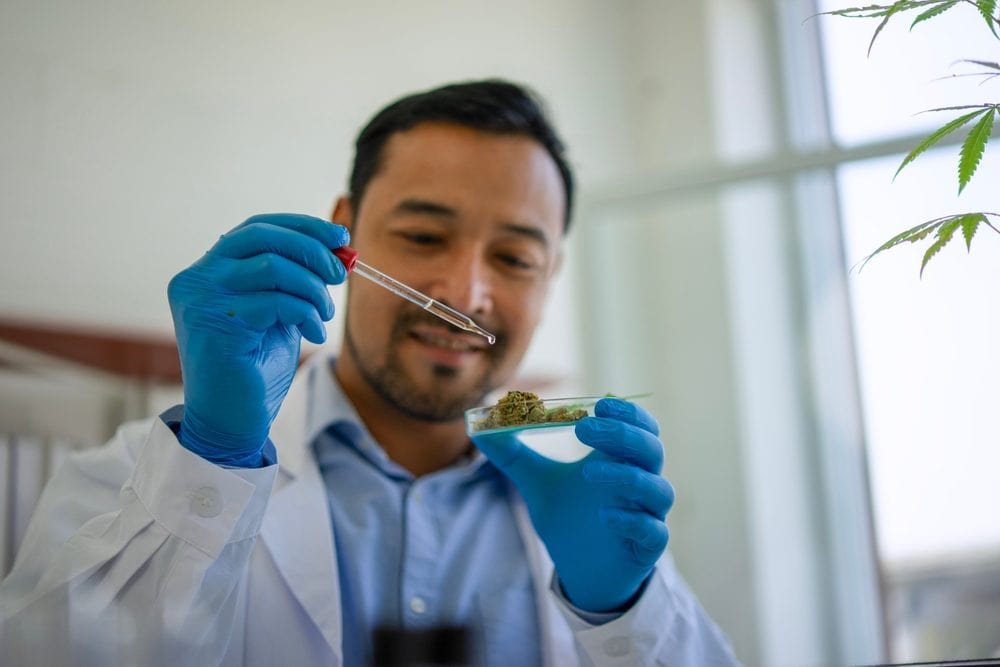
An accredited cannabis lab is a scientific facility that tests cannabis products and plant matter using analytical instruments. HPLC is the go-to technique for cannabinoid analysis, precisely separating and measuring each compound. Laboratories employ mass spectrometry and microbiological culture techniques for contaminant testing.
Independence is the key feature of a trustworthy cannabis lab. A lab that tests its own product lacks neutrality. In a well-structured quality chain, the cultivator grows and harvests, and an external accredited laboratory tests and reports. The cultivator receives data, not a result they have written themselves. This separation is what makes a Certificate of Analysis (COA) meaningful as a document.
What Do They Test For in a Cannabis Test?
Cannabinoid Profiling: THC Testing and CBD Testing
THC testing measures the concentration of tetrahydrocannabinol in a sample, expressed as a percentage of the total dry weight. This figure tells patients and prescribers how potent a given batch is and supports accurate dosing decisions. Because THC is the primary psychoactive compound in cannabis, its concentration is one of the most clinically relevant data points on any COA.
CBD testing measures cannabidiol content in the same way. CBD does not produce psychoactive effects and is often a factor in product selection for patients who prefer a lower psychoactive profile or a specific THC-to-CBD ratio. Some COAs also report additional cannabinoids such as CBG and CBN, giving a more complete picture of a batch’s chemical composition. Together, THC testing and CBD testing form the potency section of a COA and are the starting point for any informed strain selection.
Safety and Contaminant Screening
Potency data tells you what is in a product. Contaminant screening tells you what should not be. Three categories matter most for medical cannabis.
Microbial screening checks for molds, bacteria, and fungi that can develop during cultivation or storage. Mold contamination in particular carries genuine health risks for patients, making this test a non-negotiable part of any medical-grade quality process. Heavy metals testing screens for elements such as lead, arsenic, cadmium, and mercury, which cannabis plants can absorb through contaminated soil or irrigation water. Pesticide and residual chemical testing confirms that the flower has been screened against permitted residue limits and that no prohibited agricultural chemicals are present at detectable levels.
A COA that covers only potency and omits contaminant results is incomplete. Both sections together are what qualify a product for use in a medical context.
How Medicana Approaches Quality
Consistency in lab results starts before the testing phase. At Medicana Lab’s cannabis farm in Bangkok, an IoT-based environmental monitoring system tracks temperature, humidity, CO2 levels, and lighting conditions across the grow room in real time. This closed-loop indoor setup limits the environmental variability that causes potency and terpene profiles to shift between batches. When growing conditions remain consistent, test results are more likely to stay consistent too.
Medicana operates as a cultivator and facility operator, not a testing laboratory. Independent accredited laboratories conduct all analytical work on Medicana’s batches. This separation is deliberate: it ensures that the test data accompanying each product reflects an objective, third-party result rather than an internal assessment. Every batch is supported by results covering cannabinoid content and contaminant screening, available to patients and prescribers who request them.
Medicana holds GACP certification issued by Thailand’s Department of Thai Traditional and Alternative Medicine (DTAM), confirming that cultivation practices, facility standards, and batch documentation meet the national requirements for medical cannabis production. For patients navigating Thailand’s prescription-based access framework, this certification is the regulatory anchor that connects a product to a verifiable quality standard.
Ask for the Lab Results
Independent cannabis lab testing is what allows cannabis to function as a regulated, traceable product within Thailand’s medical framework. It is the mechanism that converts a cultivator’s quality claims into verifiable data. Whenever you source cannabis under a Thai medical prescription, asking for the batch-level COA is a straightforward step that confirms potency, contaminant status, and the identity of the laboratory that produced the report.
Medicana Lab’s GACP-certified indoor cultivation facility in Ladprao, Bangkok supports every batch with independent third-party analysis. View our facility and cultivation process at Medicana Lab, or reach us via LINE @medicanalab or WhatsApp at +66-92-247-9799 to request batch documentation or learn more about our product range.
References
- Cannabis testing: What are analytical labs looking for? Retrieved on 8 September 2026 from https://www.ncbi.nlm.nih.gov/pmc/articles/PMC7273481/
- Thailand GACP Standard for Cannabis and Hemp. Retrieved on 8 September 2026 from https://www.fda.moph.go.th/sites/drug/Shared%20Documents/Cannabis/GACP_Cannabis.pdf
Frequently Asked Questions About Cannabis Lab Testing
What do they test for in a cannabis test?
A full cannabis test covers two main categories. The first is cannabinoid profiling, which measures THC and CBD concentrations (and sometimes additional cannabinoids like CBG and CBN) to establish the potency of a given batch. The second is contaminant screening, which checks for microbial contamination including mold, bacteria, and fungi, as well as heavy metals such as lead and arsenic, and pesticide or residual chemical residues. A Certificate of Analysis that covers both categories is the standard document for medical-grade cannabis.
What is a cannabis laboratory?
A cannabis laboratory is an accredited scientific facility that uses analytical instruments to examine cannabis plant material and products. Common methods include High-Performance Liquid Chromatography (HPLC) for cannabinoid quantification and mass spectrometry for contaminant detection. The key feature of a credible cannabis laboratory is independence from the cultivator: the laboratory provides objective, third-party data rather than a self-certified result, which is what gives a Certificate of Analysis its value as a quality document.
What does HPLC measure in cannabis testing?
HPLC (High-Performance Liquid Chromatography) separates and quantifies individual cannabinoid compounds in a cannabis sample. In the context of cannabis lab testing, it is used primarily to measure THC and CBD concentrations expressed as a percentage of dry weight. HPLC is preferred over some older methods because it can distinguish between THC and its acidic precursor THCA, giving a more accurate picture of the active cannabinoid content in a finished product.
Why does lab testing matter when aquiring medical quality cannabis in Bangkok?
Under Thailand’s current medical cannabis framework, all cannabis sold legally must come from GACP-certified cultivators and be accompanied by documentation confirming quality and safety. Lab testing is the mechanism that produces that documentation. Without a Certificate of Analysis from an independent accredited laboratory, there is no verified basis for the potency or safety claims on a product label. For patients accessing medical quality cannabis in Bangkok under a prescription, asking to see batch-level lab results is a practical step that confirms the product meets regulatory standards.