
Key Takeaways
Proper cannabis storage directly affects the cannabinoid and terpene content patients and providers rely on. The four factors that matter most are humidity, temperature, light exposure, and oxygen contact. Getting any one of them wrong accelerates degradation. Airtight glass containers kept in a cool, dark environment away from the fridge are the most reliable option for both patients and licensed dispensaries managing batch inventory.
Medical-grade cannabis flower is a lab-tested, cannabinoid-rich botanical product, and knowing how to store cannabis correctly is as important as knowing which cultivar to choose. Improper storage conditions do not just affect freshness. They actively degrade the cannabinoids and terpenes that determine a flower’s character, potency, and consistency. For patients using cannabis under a Thai medical prescription, and for licensed providers managing batch inventory, understanding the correct cannabis storage conditions is a practical necessity.
Why Cannabis Storage Affects Quality
Two types of degradation occur when cannabis is stored incorrectly. The first is cannabinoid conversion: THC gradually converts into CBN (cannabinol) over time when exposed to heat, light, or oxygen. CBN is far less potent than THC and shifts the flower’s effect profile in ways that may not align with a patient’s prescription or expectations. The second is terpene loss: the volatile aromatic compounds responsible for a strain’s smell, flavor, and character evaporate readily when exposed to heat or air, leaving a flat, less expressive product behind.
Both forms of degradation are preventable. The cannabis storage conditions that protect cannabinoid integrity are well established, and they apply whether you are a patient storing a single batch or a licensed provider managing stock. Understanding how to store medical cannabis correctly keeps the flower as consistent and clean as it was when it left the cultivation facility.
The Four Pillars of Cannabis Storage
Moisture and Relative Humidity
The target relative humidity (RH) for dried cannabis flowers is between 55% and 65%. Below this range, the flower dries out, trichomes become brittle, and the product crumbles. Above it, excess moisture creates conditions where mold and bacterial contamination can develop on the flower. A two-way humidity control pack inside an airtight container maintains this balance passively and is one of the most practical tools for long-term storage.
Temperature Stability
Consistent, moderate temperature is the goal. Warm environments accelerate cannabinoid degradation and promote mold, while extreme cold introduces its own problems. Many patients consider refrigerator or freezer storage, but both are poor choices for cannabis flower: fluctuating fridge temperatures create cycles of condensation that introduce moisture, and freezer temperatures make trichomes brittle and prone to breaking off the flower structure during handling. A cool, stable environment between 15°C and 21°C, away from heat sources, is the practical target.
Light Protection
UV light is one of the most aggressive accelerators of cannabinoid degradation. A study published in the Journal of Pharmacy and Pharmacology identified light exposure as the single largest factor in cannabinoid loss over time. Storing flowers in opaque or UV-blocking containers and keeping those containers in a dark cupboard away from windows provides straightforward protection. Clear glass jars are better than plastic bags, but opaque or amber glass is better still.
Oxygen Control
Oxidation gradually ages cannabis, breaking down cannabinoids and flattening terpene profiles. Airtight containers limit the amount of air in contact with the flower, slowing this process. Container size matters here: an oversized jar holds excess air even when sealed, so matching the container size to the amount of flower reduces the oxygen headspace inside.
What Is the Best Storage for Cannabis?
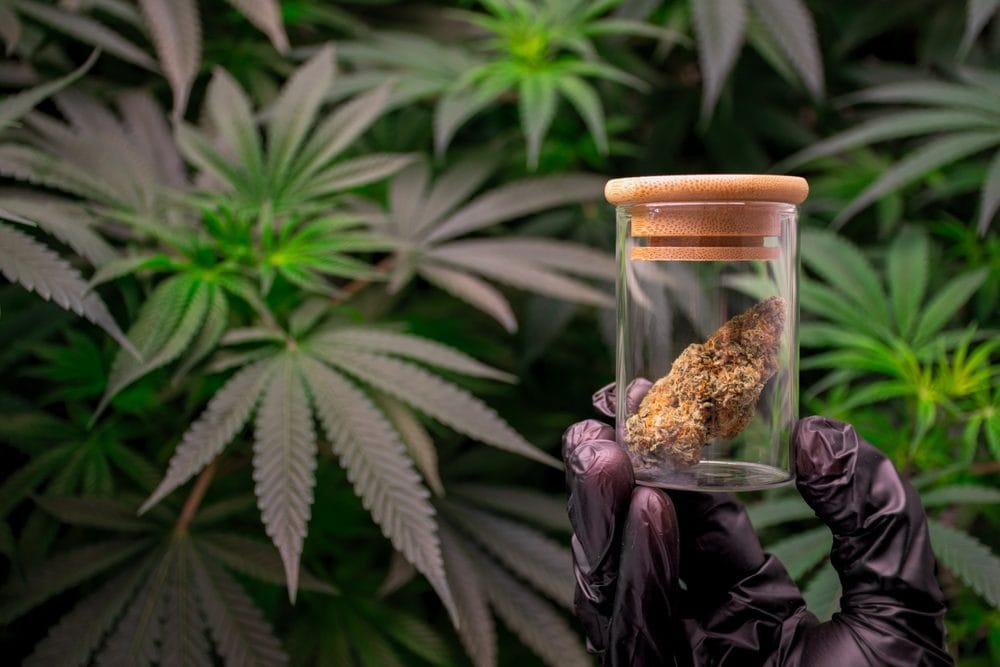
The most reliable storage solution for both patients and dispensary operators is an airtight glass jar with a two-way humidity control pack, stored in a cool, dark location. Glass is inert and does not affect flavor the way plastic can. The airtight seal controls oxygen exposure. The humidity pack maintains the 55-65% RH range without active monitoring. And dark, stable placement addresses both light and temperature in one step.
Standard plastic zip bags, commercial packaging, and clear containers left on countertops all compromise at least one of the four pillars. They may work for very short-term storage, but for any period longer than a few days, purpose-built glass storage is the clear upgrade.
For licensed dispensaries and healthcare providers learning how to stock your dispensary correctly, the same principles apply at scale. Batch-labelled, airtight glass containers stored in a climate-controlled, dark environment protect inventory quality and maintain the batch-to-batch consistency that patients and prescribing providers depend on. Understanding the different grades of weed and how storage conditions affect each grade is a practical starting point for any dispensary inventory protocol.
Protecting Your Cannabis Investment with Medicana Lab
Storage is the continuation of quality control that begins at the cultivation facility. Medicana Lab’s GACP-certified indoor growing facility in Wang Thonglang, Bangkok delivers flowers with lab-verified moisture levels, dense trichome structure, and independently tested cannabinoid profiles from the point of harvest. Every batch carries a Certificate of Analysis covering potency, terpene content, and contaminant screening.
Knowing how to store medical cannabis correctly after purchase protects that investment. Cultivars like Star Dawg and White Widow leave Medicana’s facility at optimal moisture and cannabinoid levels. The storage conditions after that point determine whether patients and providers get the same consistency three weeks later. Airtight glass, stable temperature, dark placement, and appropriate humidity control are what keep that standard intact.
View our full cultivar range and product information at Medicana Lab, or reach us via LINE @medicanalab or WhatsApp at +66-92-247-9799 for enquiries about batch availability and dispensary supply.
References
- The stability of cannabis and its preparations on storage. Retrieved on 8 September 2026 from https://pubmed.ncbi.nlm.nih.gov/7368048/
- Terpene degradation and storage of cannabis. Retrieved on 8 September 2026 from https://www.sciencedirect.com/science/article/pii/S0379073816302821
Frequently Asked Questions About Cannabis Storage Conditions
What is the best storage for cannabis?
An airtight glass jar with a two-way humidity control pack, stored in a cool, dark location, is the most reliable option for both patients and dispensary operators. Glass is inert and preserves flavor, the airtight seal controls oxidation, and the humidity pack maintains the 55-65% RH range that protects flowers from drying out or developing mold. Container size should match the amount of flower inside to limit excess air in the headspace.
Should I store my cannabis in the fridge?
No. Refrigerators are not suitable for cannabis flower storage. The temperature inside a fridge fluctuates each time the door opens, creating condensation cycles that introduce moisture to the flower and raise the risk of mold. A consistently cool, stable environment between 15°C and 21°C at room temperature, away from heat sources and light, is the better choice.
What’s the longest cannabis can stay fresh?
When stored correctly in airtight glass containers at stable temperature, controlled humidity, and away from light, dried cannabis flower can retain meaningful cannabinoid and terpene quality for up to 12 months. Research published in peer-reviewed journals suggests that properly stored cannabis loses relatively little potency over this period compared to flowers exposed to heat, light, or fluctuating humidity. After 12 months, degradation accelerates regardless of storage conditions, so consuming within that window is advisable.
Can cannabis go in the fridge?
While it might seem logical to refrigerate cannabis to slow degradation, this approach tends to cause more problems than it prevents. Fridge conditions expose flowers to repeated temperature fluctuations and humidity changes that promote condensation and mold growth. Freezing is equally problematic, since trichomes become brittle at very low temperatures and break off during handling. A cool, dark cupboard at stable room temperature remains the recommended approach for both patients and licensed providers.