
Key Takeaways
GACP stands for Good Agricultural and Collection Practices, a WHO-backed standard for growing and handling medicinal plants like cannabis. In Thailand, GACP certification is issued by the Department of Thai Traditional and Alternative Medicine (DTAM) and is mandatory for any cannabis grown for medical purposes. It covers cultivation, testing, and record-keeping, while GMP takes over for manufacturing, together forming a traceable chain from soil to finished product.
In Thailand, cannabis cultivation without proper certification is illegal, whether the crop is destined for medical use, research, or industrial hemp. So what is GACP, and why does it sit at the center of legal cannabis here?
GACP, short for Good Agricultural and Collection Practices, is the WHO-backed standard governing how medicinal plants like cannabis are grown, harvested, and handled before they reach a lab or a patient.
Understanding what is GACP certification in practice, how it differs from GMP, and why it matters for anyone sourcing cannabis in Bangkok all come down to one thing: traceability from soil to sale.
What Does GACP Stand For?
GACP stands for Good Agricultural and Collection Practices, a World Health Organization guideline for cultivating and collecting medicinal plants used as starting materials for herbal medicines. It predates cannabis specifically.
The framework was developed for medicinal plants in general, then adapted by individual countries as cannabis legalization spread. Beyond that, it helps to know what is GACP in herbal drug technology contexts, which gets at its real role: it is the first quality checkpoint in the production chain. Everything downstream, from lab testing to the finished product, depends on the raw plant material meeting this standard.
What Is GACP in Thailand?
Thai GACP adapts WHO and EU GACP guidelines to Thailand’s Cannabis and Hemp Act, and it is mandatory for any cannabis grown for medical purposes. In the Thai context on what is GACP certification, it is a certificate issued by the Department of Thai Traditional and Alternative Medicine (DTAM) under the Ministry of Public Health. The process combines document review, an on-site facility inspection, and accredited lab testing before a certificate is granted.
Without it, cannabis cultivation in Thailand is not legally recognized, regardless of the scale or intended use of the operation.
What Makes a GACP Farm?
Understanding what makes a GACP farm is less about how it looks and more about what it can prove. Thai GACP recognizes three cultivation methods: outdoor, greenhouse, and indoor controlled environments.
Each one has to meet its own security and environmental controls. What unites them is a shared standard for documentation, testing, and traceability.
Cultivation and Handling Standards
A GACP farm follows documented procedures for site selection, soil and water quality, clone selection, fertilizer and pest control inputs, harvesting, drying, and storage. In Thailand, DTAM assesses a site against 14 major requirement categories, covering everything from standard operating procedures to worker hygiene and storage conditions, before it certifies the operation.
Record-keeping is just as central as the growing itself. Operators keep continuous seed-to-sale records, including seed provenance, fertilizer logs, pest-management reports, and harvest dates, so every batch can be traced back to its source.
Certification is also facility-specific and cannot be transferred between sites, and it is valid for one to three years with annual surveillance inspections, so a certified farm is re-checked rather than approved once and left alone.
Testing and Verification
Testing sits at the core of GACP. Soil and water are tested for heavy metals and toxic residues before cultivation even begins, and this is repeated at least once ahead of each planting cycle. Then every crop cycle undergoes batch-level testing for cannabinoid content, microbial contamination, heavy metals, and pesticide residues.
In Thailand, this testing has to be carried out by the Department of Medical Sciences or another approved laboratory, so quality is independently verified at multiple points.
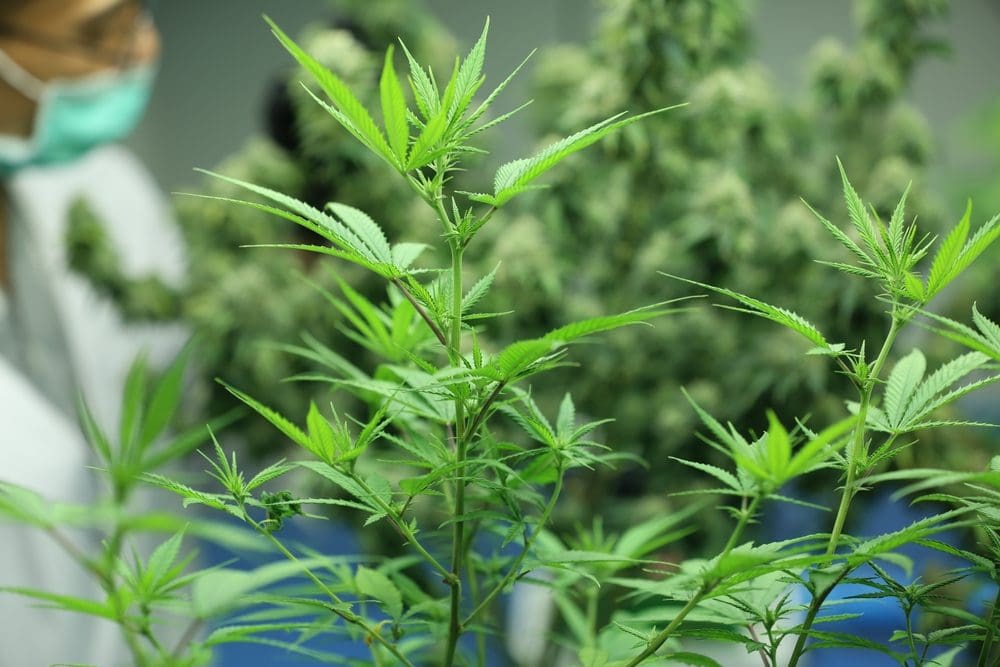
GACP vs GMP: What’s the Difference?
GACP and GMP cover different stages of the supply chain.
- GACP applies to the agricultural and collection phase: how the plant is grown, harvested, and initially processed.
- GMP, or Good Manufacturing Practice, applies later, to extraction, formulation, packaging, and final product release.
Together, the two form a chain. GACP ensures clean, consistent raw flower, while GMP ensures that anything made from it meets pharmaceutical-grade standards.
Medicana’s GACP-Certified Standard in Bangkok
Medicana Lab holds GACP certification (Cert No. TH-GACP 16/2569) from DTAM, valid through October 2028, covering all 785 sq.m. of our indoor facility in Wang Thonglang, Bangkok. Every batch is independently tested through HPLC potency analysis and separate heavy metals screening, with COA documentation available on request.
Our farm manager also holds DTAM certification in Good Agricultural and Collection Practices for medical cannabis, adding a second layer of verified expertise. These are the benefits of GACP in action: traceability, contaminant screening, and documented compliance you can verify as a customer.
Choose GACP-Certified Cannabis From Medicana in Bangkok
GACP is the WHO-backed cultivation standard Thailand’s DTAM requires for any cannabis grown for medical use, covering everything from soil testing to harvest records. GMP takes over from there for anything manufactured from that flower. In Thailand, a facility cannot legally cultivate cannabis without it.
Here at Medicana Lab, we are GACP-certified under DTAM across our full Bangkok facility, with every batch independently tested and a DTAM-certified farm manager overseeing cultivation.
Aquire medical grade cannabis in Bangkok with Medicana Lab today. Check current cultivars, GACP certification details, and COA lab results before you visit, or reach us on LINE @medicanalab or WhatsApp at +66-92-247-9799.
References
- WHO Guidelines on Good Agricultural and Collection Practices (GACP) for Medicinal Plants. Retrieved on 8 September 2026 from https://www.who.int/publications/i/item/9241546271
- GACP in Thailand. Retrieved on 8 September 2026 from https://gacp.co.th/
- GACP Cannabis Certification in Thailand. Retrieved on 8 September 2026 from https://spacetreesthailand.com/blog/cannabis/gacp-cannabis-certification-in-thailand/
- GACP Medical Cannabis Certification. Retrieved on 8 September 2026 from https://www.sgs.com/en-th/services/gacp-medical-cannabis-certification
Frequently Asked Questions About GACP Certification
What does GACP stand for?
GACP stands for Good Agricultural and Collection Practices. It is a World Health Organization guideline for cultivating and collecting medicinal plants used as starting materials for herbal medicines. For cannabis, it sets the standards for how the plant is grown, harvested, and handled to ensure it is clean, consistent, and suitable for medical use.
What is GACP in Thailand?
In Thailand, GACP is a mandatory certification for any cannabis grown for medical purposes, adapted from WHO and EU guidelines under the Cannabis and Hemp Act. It is issued by the Department of Thai Traditional and Alternative Medicine (DTAM) after document review, facility inspection, and accredited lab testing. Without it, cannabis cultivation is not legally recognized.
What is the difference between GACP and GMP?
GACP covers the agricultural stage, meaning how cannabis is grown, harvested, and initially processed. GMP, or Good Manufacturing Practice, covers the manufacturing stage, including extraction, formulation, packaging, and final product release. GACP ensures clean, consistent raw flower, while GMP ensures the finished products made from it meet pharmaceutical-grade standards.
What are the benefits of GACP certification?
GACP certification reduces contamination risks and ensures medical cannabis starts from clean, well-documented plant material. For patients, it means greater consistency and safety. For producers, it provides traceability, regulatory compliance, and credibility, and it is often a prerequisite for supplying medical and export markets.