
Key Takeaways
Sativa, indica, and hybrid classifications offer a useful starting point, but a strain’s terpene and cannabinoid profile is a more reliable guide to its actual character than its category label alone. When reviewing lab reports, THC-to-CBD ratios and terpenes like myrcene and caryophyllene give you concrete, verifiable information to discuss with your healthcare provider. In Thailand, all legal medical cannabis must come from a GACP-certified cultivator, which means batch-level traceability, contaminant testing, and consistent potency are the baseline standards any quality source should meet.
Cannabis is a complex botanical plant containing dozens of cannabinoids and hundreds of terpenes, each interacting with the human body in ways that vary by individual. For patients accessing medical cannabis in Thailand, knowing how to choose cannabis goes beyond picking a name that sounds appealing. The right cultivar for your situation depends on verified chemical composition, consistent growing standards, and decisions made in consultation with your prescribing doctor. This cannabis strain guide walks through each step of that evaluation process.
Step 1: Understand the Primary Cannabis Classifications
The first layer of any cannabis strain guide is classification. Cannabis is broadly categorized into three types, each with general characteristics that inform how a strain may feel, though individual results always vary.
Sativa strains are commonly described as uplifting and cerebral in character, often associated with daytime use and increased focus. Their terpene profiles tend toward bright, citrusy, or piney aromas. Indica strains lean toward a calming, full-bodied character, often associated with evening use and physical relaxation. Hybrid strains combine genetics from both, offering a varied effect profile depending on the lineage and the ratio of sativa to indica genetics in the cultivar.
One important caveat: almost every cannabis cultivar on the market today is a hybrid to some degree. Pure sativa or pure indica genetics are increasingly rare, which means the category label is a starting point rather than a precise prediction. The more reliable guide is what the lab report actually shows. To understand how to choose cannabis with real confidence, the next step is always the chemical profile. You can review the types of cannabis in detail to learn more about how classifications are structured.
Step 2: Analyze Lab-Verified Cannabinoid and Terpene Profiles
Cannabinoid Ratios: THC and CBD
A Certificate of Analysis (COA) from an independent lab is the most useful document when evaluating any cultivar. It shows exact cannabinoid percentages, confirming what you are actually consuming rather than what the packaging implies. The two primary cannabinoids to review are THC (tetrahydrocannabinol), which produces psychoactive effects, and CBD (cannabidiol), which is non-intoxicating and often associated with calming characteristics.
For patients new to medical cannabis, starting with lower THC concentrations and a higher CBD ratio is a common approach that allows the body to adjust gradually. Higher THC products are not inherently better; they require more precise dosing and carry a greater chance of side effects at elevated quantities. Your prescribing doctor is the right person to advise on the THC-to-CBD ratio appropriate for your condition and tolerance. Understanding the different grades of cannabis and what the lab numbers actually mean is a practical first step before that conversation.
Terpene Profiles and the Entourage Effect
Terpenes are the aromatic compounds responsible for a strain’s smell and flavor, and research suggests they also influence its overall character by interacting with cannabinoids. This interaction is commonly referred to as the entourage effect. Myrcene, one of the most common terpenes in cannabis, is associated with herbal, earthy aromas and is often linked to relaxing, sedating qualities. Caryophyllene carries a peppery warmth and is the only terpene known to interact directly with the body’s endocannabinoid receptors. Terpinolene has a fruity, floral profile and is often found in more energising sativa-leaning cultivars.
Reading the terpene profile on a COA gives you a more accurate picture of how a cultivar may feel than the sativa or indica label alone. When comparing all strains of weed at a licensed dispensary, ask to see the full lab report for each batch, not just a summary on the packaging.
Step 3: Look for GACP-Certified Quality Standards
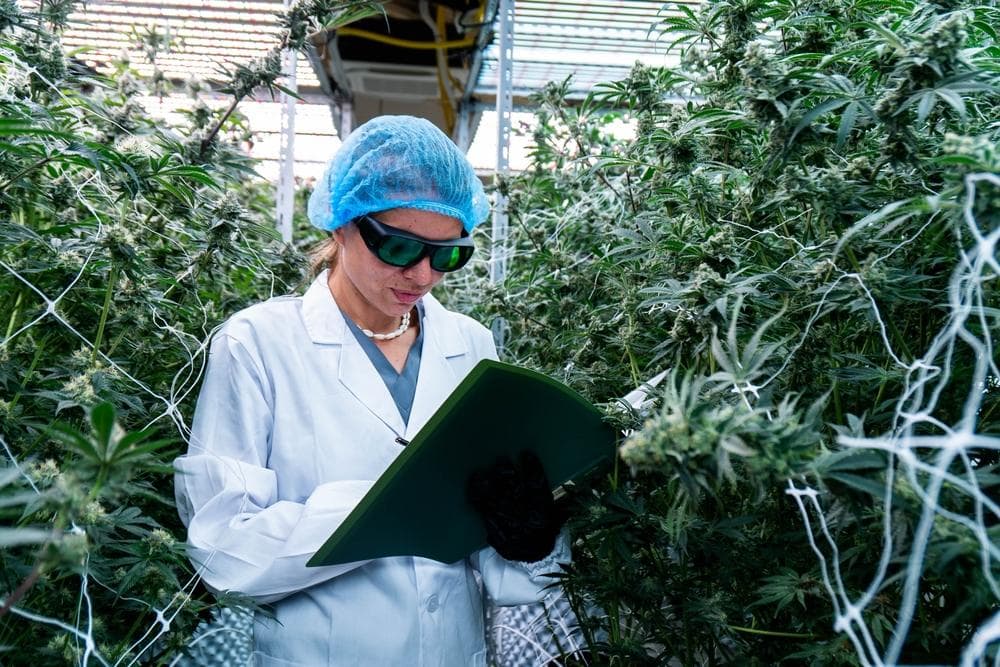
In Thailand, Good Agricultural and Collection Practices (GACP) certification is the recognized quality standard for medical cannabis cultivation. It is issued by the Department of Thai Traditional and Alternative Medicine (DTAM) under the Ministry of Public Health and covers every stage of the growing process: how plants are cultivated and harvested, how the facility is maintained, how batches are documented, and how contaminant testing is conducted.
For patients, GACP certification matters for a practical reason: it is the mechanism that ensures batch-to-batch consistency. Without it, potency can vary significantly between harvests, making precise dosing unreliable. Contaminants including heavy metals, pesticides, and mold are tested as part of the certification process, so a GACP-certified product carries a verified safety baseline that unregulated sources cannot offer.
When you choose a pharmaceutical grade cannabis dispensary operating under GACP standards, you are choosing a source where the quality claims are backed by documentation rather than marketing language. The different grades of weed that exist in the market reflect real differences in cultivation standards, testing rigor, and traceability, and GACP certification is the clearest signal of where a product sits in that spectrum.
Medicana Lab: Lab-Verified Cultivars in Bangkok
Choosing the right strain is a process of matching a verified chemical profile to your individual needs, working alongside a healthcare provider who understands your prescription and medical context. The category label helps orient you, the terpene and cannabinoid data gives you specifics, and the cultivation standard tells you whether the numbers on the label reflect what is actually in the product.
Medicana Lab operates a GACP-certified indoor cultivation facility in Wang Thonglang, Bangkok, growing medical-grade cannabis to verified quality standards from 2022. Every cultivar is lab-tested using HPLC potency analysis and independent contaminant screening, with a full COA available on every batch. Our current lineup includes Star Dawg, Ultra Thai, Durban Poison, Double Dawg, Cape Candy, Strawberry Cookies, and White Widow, each with defined terpene profiles and cannabinoid percentages so you can make an informed choice with your doctor.
View our full product information and cultivar range at Medicana Lab, or reach us via LINE @medicanalab or WhatsApp at +66-92-247-9799 to find the right fit for your prescription.
References
- Taming THC: potential cannabis synergy and phytocannabinoid-terpenoid entourage effects. Retrieved on 8 September 2026 from https://www.ncbi.nlm.nih.gov/pmc/articles/PMC3165946/
- Thailand’s GACP Standard for Cannabis Cultivation. Retrieved on 8 September 2026 from https://www.fda.moph.go.th/sites/drug/Shared%20Documents/Cannabis/GACP_Cannabis.pdf
Frequently Asked Questions About the Cannabis Strain Guide
What does research say about cannabis and the immune system?
Early research suggests that cannabinoids interact with the endocannabinoid system, which plays a role in immune regulation, inflammation response, and cellular signaling. Studies are ongoing and findings are preliminary, meaning no definitive conclusions have been established for clinical use in immune-related conditions. In Thailand, the five legally recognized qualifying conditions for medical cannabis prescriptions are insomnia, chronic pain, migraines, Parkinson’s disease, and loss of appetite. Any interest in cannabis for immune-related concerns should be discussed directly with a licensed Thai medical practitioner.
What is the best cannabis for beginners?
For patients new to medical cannabis, starting with a lower THC concentration and a balanced or higher CBD ratio is a widely recommended approach. Hybrid cultivars with moderate potency and well-documented terpene profiles are generally easier to tolerate than high-THC sativa-dominant strains. Lab-tested products from a GACP-certified source are particularly important for first-time patients, since verified potency data allows for more accurate initial dosing. Your prescribing doctor is the right person to recommend a specific starting point based on your condition and tolerance.
What are the 4 types of cannabis?
Cannabis is most commonly categorized into three cultivar types: sativa, indica, and hybrid. Some classification systems also include Cannabis ruderalis, a low-THC variety used primarily in breeding for its autoflowering trait rather than for medical use. In practical terms, the sativa, indica, and hybrid categories are the relevant framework for patients selecting a cultivar, with sativa associated with uplifting and energizing qualities, indica with calming and relaxing ones, and hybrids sitting across a wide spectrum depending on their genetic lineage.
How do I read a cannabis lab report?
A Certificate of Analysis (COA) from an independent lab shows the cannabinoid profile of a specific batch, including THC and CBD percentages, along with any additional cannabinoids present. It also lists terpene concentrations and results from contaminant testing for heavy metals, pesticides, and microbial matter. When reviewing a COA, confirm that it was issued by an accredited third-party laboratory, not by the cultivator itself, and that the batch number on the report matches the product you are considering. GACP-certified cultivators in Thailand are required to provide this documentation, so requesting it before purchase is a reasonable and straightforward step.