
Key Takeaways:
Premium cannabis is defined by more than THC percentages or price. Genetics, cultivation methods, drying and curing processes, and independent lab testing all determine cannabis quality far more than any marketing label. Understanding these factors makes it easier to identify products that meet real standards from those that only claim to.
While premium is one of the most common words found on cannabis packaging, it is also one of the most inconsistently applied. The gap between marketing promises and actual flower quality varies significantly from jar to jar. For patients trying to make informed decisions, true quality cannot be taken on faith. What makes cannabis premium is not a bold claim. It is a set of measurable standards you can see, smell, and verify.
What Is Premium Cannabis?
Premium cannabis refers to flower that is grown, processed, and tested to verified standards of potency, purity, and consistency across every batch. It is not a marketing label. It is the result of controlled, documented processes at every stage, from genetic selection through packaging.
One common misconception is that higher THC content automatically means higher quality. In reality, THC percentages are only one piece of the picture. Terpene richness, careful cultivation methods, and proper curing have just as much influence on the final product, and often more. A cultivar with moderate THC but a full, well-preserved terpene profile can produce a noticeably better experience than a high-THC flower rushed through drying. Real premium quality is built into the process, not printed on the packaging.
Key Factors That Determine Cannabis Quality
Several factors work together to determine cannabis quality, from the plant’s genetic starting point to the final packaged product.
Genetics and Cultivation
Quality begins with genetics. Different cultivars are selectively bred to produce specific cannabinoid and terpene profiles, and starting with strong genetics is the foundation of any consistent product.
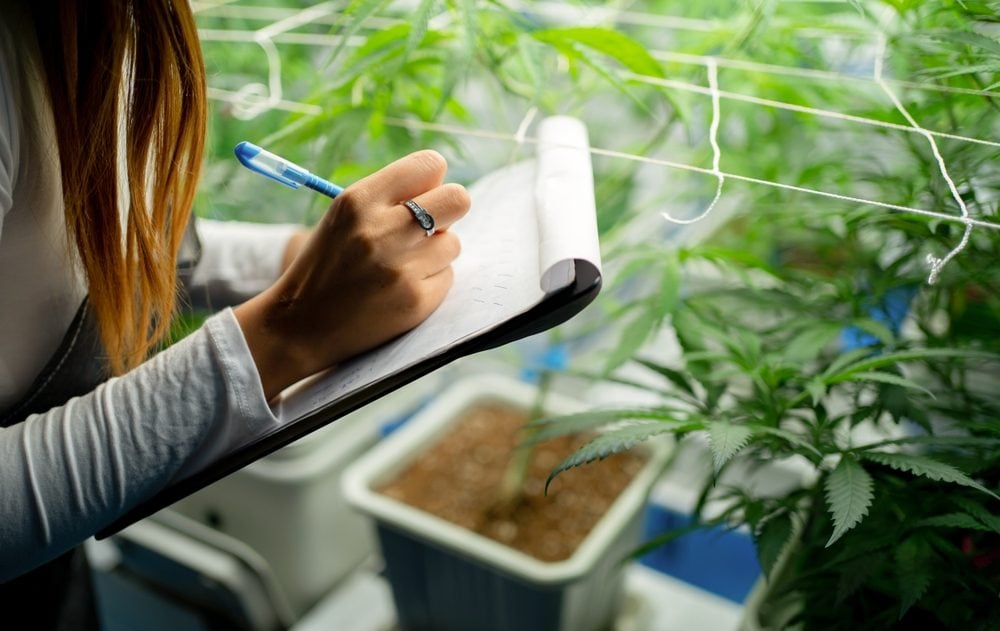
Clone-based cultivation, where new plants are grown from cuttings of a proven mother plant rather than from seeds, ensures genetic consistency across every harvest. Two harvests of the same cultivar can be nearly identical when the genetic material is the same. Indoor cultivation adds another layer of control, since temperature, humidity, lighting, and airflow can all be finely tuned, and each of these directly affects how cannabinoids and terpenes develop during the plant’s life cycle.
Drying, Curing, and Storage
What happens after harvest matters just as much. Proper drying and curing stabilize cannabinoids and terpenes while preserving moisture balance, aroma, and flavor. Rushed drying produces harsh, brittle flower with muted character; careful curing produces flower that is smooth, aromatic, and long-lasting.
Well-cured flower carries a strong, distinct aroma and breaks apart cleanly without crumbling or feeling damp. After curing, storage in airtight, light-protective containers with clear batch numbers and packaging dates preserves freshness and prevents cannabinoid degradation over time.
Lab Testing and Verification
The final piece is independent verification. Premium cannabis is backed by third-party lab testing that measures cannabinoid percentages, maps terpene profiles, and screens for contaminants including heavy metals, pesticides, and mold.
A Certificate of Analysis (COA) is the document that records these results. It provides transparency for patients, healthcare providers, and dispensaries, and it is the difference between a product you can verify and one you have to trust on faith.
How to Identify Premium Cannabis
For anyone wondering what the highest quality of cannabis is to look for, a few practical signs give reliable answers:
- Appearance: Dense, well-trimmed buds with visible trichome coverage, the crystal-like structures that contain cannabinoids and terpenes. Avoid flower showing mold, discoloration, or excessive stems and seeds
- Aroma: A strong, distinct smell indicates preserved terpenes and proper curing. Flower that lacks aroma or smells faintly like hay usually signals poor handling
- Packaging and dating: Airtight, opaque packaging with clear batch numbers, harvest dates, and lot identifiers shows the product is properly tracked from harvest to shelf
- Provider transparency: Reputable sellers can answer clear questions about origin, cultivation, and testing. Vague answers, hesitation, or an inability to produce paperwork on request are signals worth taking seriously
The Role of GACP Certification in Cannabis Quality
GACP, which stands for Good Agricultural and Collection Practices, is a certification standard that verifies a facility follows documented, consistent processes across cultivation, harvesting, processing, and storage. It is one of the most reliable indicators of quality at the source.
In Thailand, GACP certification is issued by the Department of Thai Traditional and Alternative Medicine (DTAM) under the Ministry of Public Health. For patients and consumers, this means the cannabis was produced under controlled, auditable conditions with traceable quality records for every batch, which is the difference between quality claims that can be trusted and claims that cannot.
Premium Is a Process, Not a Label
Once you know which signals to look for, evaluating premium cannabis becomes much more straightforward. By examining the flower, smelling its aroma, reviewing the batch data, and verifying the seller’s transparency, you gain far more insight than any marketing claim can offer.
This commitment to transparency is why Medicana Lab operates as a GACP-certified indoor cultivation facility in Wang Thonglang, Bangkok. We believe every patient should be able to review documented details, such as harvest dates and terpene profiles, before choosing a cultivar. To align with Thailand’s Ministry of Public Health 2025 framework, a valid Thai medical prescription is required for all purchases. To make this process seamless, our team issues these prescriptions directly in-store during your visit, so no prior clinic appointment or external doctor is needed..
To compare our current cultivars of premium medical cannabis in Bangkok, visit our products page. For questions on availability or specifics, message our team on LINE @medicanalab or WhatsApp +66-92-247-9799.
References
- Peer-Review Blinded Assay Test (P-BAT): A Framework for Trustless Laboratory Quality Assurance for State-Regulated Cannabis Markets. Retrieved 8 September 2026, from https://www.ncbi.nlm.nih.gov/pmc/articles/PMC11748918/
Frequently Asked Questions About Cannabis Quality
What makes cannabis premium quality?
Premium cannabis quality is the result of several factors working together, not any single one. Strong genetics, indoor cultivation with precise environmental control, proper drying and curing, and independent lab testing all contribute to the finished product. When each of these stages is documented and verifiable, the cannabis can be considered genuinely premium rather than premium in name only.
Does higher THC mean better cannabis quality?
Not necessarily. THC percentage is only one measure of a cannabis flower, and it does not reflect the terpene profile, cultivation care, or curing quality that shape the overall experience. Some of the most highly regarded cultivars carry moderate THC alongside rich, well-preserved terpene profiles, which many patients find produce a more balanced and enjoyable experience.
Is indoor cannabis better than outdoor?
Neither is universally superior, but indoor cultivation offers a level of environmental control that outdoor growing cannot match. Temperature, humidity, lighting, and airflow can all be finely tuned indoors, which allows growers to consistently reproduce the conditions that support strong cannabinoid and terpene development. Outdoor cannabis benefits from natural sunlight and lower production costs, but is more exposed to pests, weather variability, and contamination. Most facilities producing to medical-grade standards operate indoors for these reasons.
What are the different grades of cannabis?
Cannabis is often grouped into informal grades based on appearance, aroma, cultivation care, and testing standards. Terms like premium, top-shelf, mid-shelf, and lower-grade are used across the industry, though there is no universal grading system. What separates them in practice comes down to the same factors that define quality overall: genetics, cultivation environment, curing quality, and independent lab verification.